

Core Disclosure & Hardware Announcement
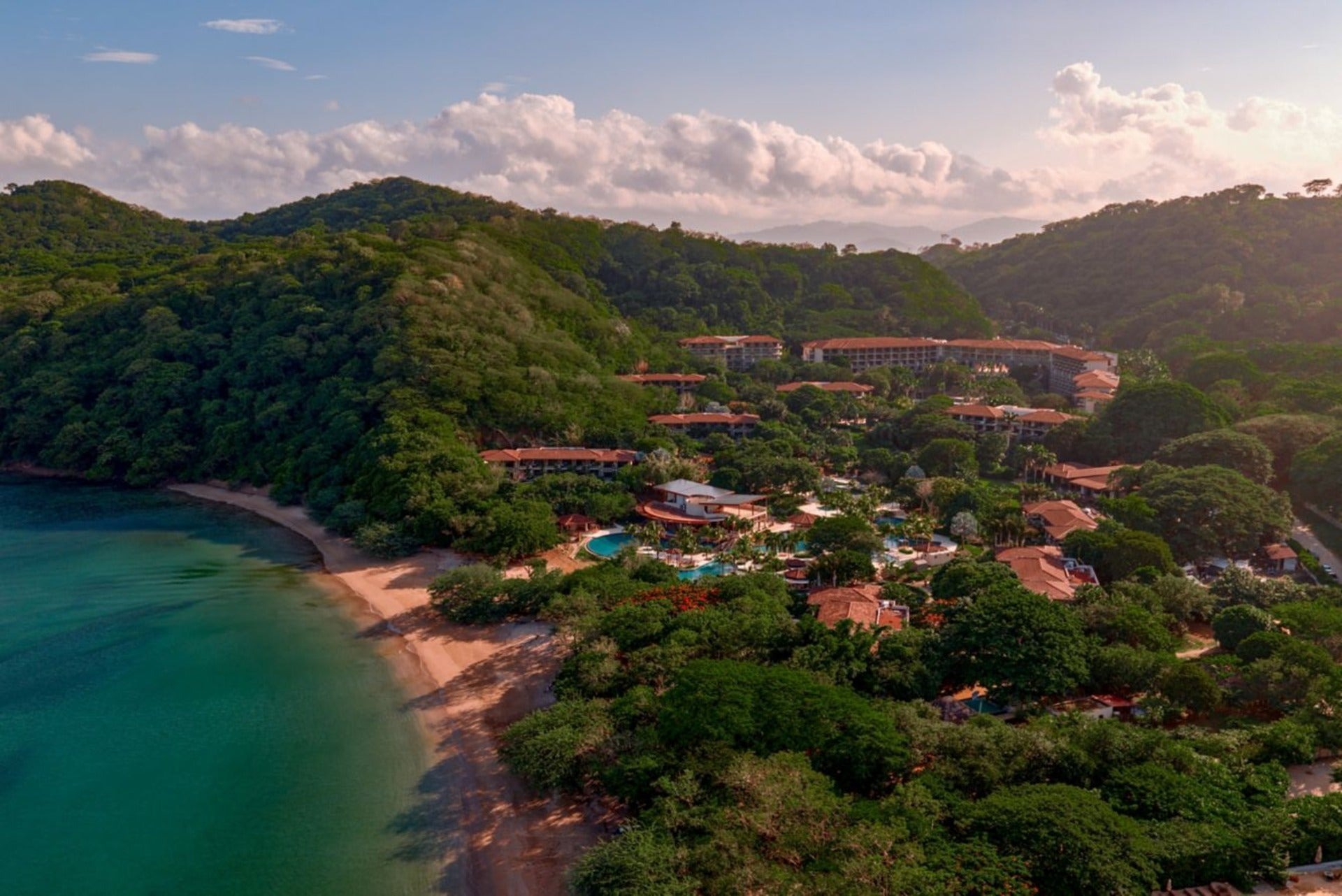
Marriott International has expanded its footprint in the luxury all-inclusive market with the opening of the 415-room JW Marriott Costa Elena Resort & Spa in Guanacaste, Costa Rica, priced at $900 USD or 114,000 Marriott Bonvoy points per night based on double occupancy. Overlooking Playa El Jobo, this property delivers a fully bundled luxury resort infrastructure built specifically for high-end families, wellness travelers, and loyalty point redeemers looking for all-inclusive hospitality without sacrificing premium service standards. In addition to Costa Elena, recent portfolio updates include the renovated Ritz-Carlton Naples, Tiburón in Southwest Florida starting at $600 USD per person (effectively $1,200 USD per night for two adults) or 69,000 Marriott Bonvoy points per night, the JW Marriott Ranthambore Resort & Spa in Rajasthan, India starting at $600 USD or 35,000 Marriott Bonvoy points per night, and the budget urban debut of Ruby Lilou in Marseille, France starting at $80 USD or 25,000 IHG One Rewards points per night.
🛒 Where to Buy: Business Travel Luggage
Editorial Note & Product Verification: The Cool Great Buys editorial desk independently verifies manufacturer technical specifications, cross-checks active retail availability across authorized sellers, and evaluates verified consumer reliability data before publishing product evaluations. All featured prices and promotions reflect active market rates at the time of publication.
- Samsonite Freeform Hardside Expandable Luggage: View on Amazon
Click the link above to check current pricing, availability, and customer reviews on Amazon.
Beyond single-property debuts, major brand owners are aggressively executing global network expansions. Marriott has signed multi-property agreements adding eight hotels across the Netherlands—introducing the Series by Marriott line to Amsterdam, The Hague, Maastricht, and Breda, alongside the Tribute Portfolio entry via Hotel Mariënhage in Eindhoven—and seven properties across Thailand totaling 1,262 rooms, headlined by the planned 288-room JW Marriott Bangkok Sathorn and debuts for citizenM and Four Points Flex by Sheraton. Meanwhile, Hilton has slated the 281-room Hotel Cala along Tampa’s Riverwalk for a January 2027 opening, and IHG has signed the 130-room voco Vrindavan in Uttar Pradesh, India, target-dated for the first quarter of 2031. Detailed breakdown coverage of these pipeline announcements was first highlighted in a recent Upgraded Points news report.
When you break down these property announcements for a normal household, the real question isn’t just how shiny the new lobby looks or how many infinity pools are on the site map. What matters is what this actual vacation costs you out of pocket once resort fees, taxes, food, and point transfers are factored into the equation. In plain English, luxury hotel press releases love to highlight marble bathtubs and private cabanas, but as a practical traveler watching total outlay, my focus is figuring out whether redeeming six-figure point balances or dropping nearly a thousand dollars a night delivers actual value for a real family vacation. what these numbers mean when you run the math through a budget-conscious lens.
Manufacturer Claims vs. Engineering Reality
The core financial claim made by luxury all-inclusive properties like the JW Marriott Costa Elena is that a single cash rate of $900 USD or a redemption price of 114,000 Marriott Bonvoy points per night eliminates the unpredictable financial friction of traditional resort stays. On paper, 114,000 points for a $900 USD cash room yields a redemption value of approximately 0.79 cents per point. For Marriott Bonvoy points, which carry a industry-standard baseline valuation around 0.7 to 0.8 cents per point, this sits squarely in fair-value territory. However, the engineering reality of an all-inclusive setup changes the cash equation: at a standard luxury hotel, a family of four easily spends $300 USD to $400 USD daily on three meals, snacks, non-alcoholic drinks, cocktails, and auto-gratuities. By absorbing all food and beverage expenses into the base room rate, the cash baseline is far more predictable than a traditional pay-as-you-go luxury resort stay.
Conversely, examining the Ritz-Carlton Naples, Tiburón reveals a dramatic imbalance between cash pricing and award redemptions. The property lists cash rates starting at $600 USD per person, which translates to a starting room rate of $1,200 USD per night for double occupancy before localized lodging taxes and mandatory resort fees are added. Yet, the award redemption rate starts at just 69,000 Marriott Bonvoy points per night. Doing the direct math reveals a redemption yield of roughly 1.74 cents per point—more than double the standard valuation of Marriott currency. For travelers leveraging award points earned via credit cards like Platinum Card ® from American Express or The Business Platinum Card ® from American Express, paying cash for this property makes zero practical sense when award nights are available at that tier.
On the opposite end of the spectrum, IHG’s opening of Ruby Lilou in Marseille illustrates where award point redemptions completely fall apart. The property advertises entry rates of $80 USD or 25,000 IHG One Rewards points per night. Redeeming 25,000 points for an $80 USD room yields an abysmal 0.32 cents per point valuation—well below the 0.5 cent average benchmark for IHG One Rewards points. That’s the catch. Paying cash for urban boutique properties like the Ruby Lilou keeps your hard-earned points intact for high-tier luxury stays where point leverage is three to four times higher. Is this worth it for a normal person? Yes, but only if you strictly pay cash and skip the point redemption entirely on cheap cash nights.
Under the Hood: Technical Architecture and Build Quality
Analyzing the physical build and operational layout of the JW Marriott Costa Elena Resort & Spa reveals a massive physical infrastructure designed to process high guest volume without creating crowding bottlenecks. The property spans 415 guestrooms built along the shoreline of Playa El Jobo in Guanacaste. To distribute guest traffic across the resort grounds, the architectural plan incorporates 17 distinct swimming pools and 15 standalone dining and beverage venues. Health and wellness operations are centered around a 16,000-square-foot facility housing the Spa by JW and a dedicated Mindfulness House. For higher-tier guests, the resort incorporates the Griffin Club—an enclave within the resort featuring private beach access, a dedicated swimming pool, and personalized concierge service.
The thing the product page buries in the footnotes is that all-inclusive coverage at luxury resorts almost always comes with structural tiers and hidden add-ons. While basic meals and standard beverages are covered under the baseline $900 USD or 114,000-point rate, specialized dining cuts, premium cellared wines, and treatment services at the 16,000-square-foot spa facility remain strictly pay-per-use line items. What caught my eye reading the full spec sheet is that multi-bedroom suites and Griffin Club privileges carry substantial surcharges over the base room tier. For a family expecting total end-to-end inclusion, failing to double-check which of the 15 dining venues require extra surcharges can quickly inflate an otherwise fixed-budget vacation.
In Florida, the Ritz-Carlton Naples, Tiburón focused its multimillion-dollar overhaul on structural refresh elements rather than expansion. The layout update renovated all guestrooms and suites, replaced the central lobby infrastructure, and rebuilt the property’s Club Lounge space. Guest access remains tied to its primary physical selling points: two 18-hole Greg Norman-designed championship golf courses, high-grade tennis courts, three newly launched restaurant concepts, and a multi-slide family pool complex. In India, the 127-room JW Marriott Ranthambore Resort & Spa features a physical build dominated by tented safari suites and private-pool villas designed for immediate proximity to Ranthambore National Park’s tiger reserve zones. Meanwhile, the budget-focused Ruby Lilou in Marseille utilizes a compact 237-room layout featuring soundproofed room envelopes, glass rainfall shower stalls, yacht-inspired interior joinery, and a centralized rooftop terrace intended to maximize footprint efficiency in a dense urban core.
Verified Market Alternatives
When evaluating the the item’s $900 USD or 114,000 Marriott Bonvoy points per night price tag, smart travelers must evaluate competing luxury all-inclusive options in the same geographic and points ecosystem. A primary direct competitor in the high-end all-inclusive space is the Hyatt Ziva Cap Cana in Punta Cana, Dominican Republic. Bookable direct through World of Hyatt, standard room rates typically range from $450 USD to $650 USD per night cash, or between 21,000 and 29,000 World of Hyatt points per night for double occupancy. Featuring 12 full-service restaurants, a massive water park complex, and pristine beachfront access, Hyatt’s property delivers an equivalent luxury all-inclusive experience at less than a third of the point cost required by Marriott’s flagship Costa Rica property. For families aiming to stretch a point balance across a multi-night stay, Hyatt’s structural point pricing offers significantly better overall value.
Another compelling alternative for family-focused all-inclusive travel is the Hilton Rose Hall Resort & Spa in Montego Bay, Jamaica. Available through Hilton Honors, cash rates generally fluctuate between $320 USD and $500 USD per night, with award redemptions averaging 80,000 to 95,000 Hilton Honors points per night. Crucially, silver, gold, and diamond status holders booking award nights through Hilton automatically receive a Fifth Night Free on reward bookings. This feature lowers the effective redemptions rate to roughly 64,000 Hilton points per night for a five-night family getaway. When compared to spending 456,000 Marriott points for four nights at Costa Elena, Hilton Rose Hall represents a far more economical alternative for travelers who prioritize total room capacity, water park access, and predictable cost ceilings over brand-new luxury resort hardware.
Final Editorial Verdict: Long-Term Reliability Outlook
Marriott’s aggressive push into luxury all-inclusives with the the product Resort & Spa represents a clear shift in how major hotel conglomerates cater to premium travelers. From a hardware perspective, 415 rooms spread across 17 pools, 15 restaurants, and a dedicated wellness complex offer an exceptional physical setup for families who want high-end amenities without leaving the property. However, at a cash price of $900 USD per night, it represents a steep investment for a standard family vacation. On points, the 114,000 Marriott Bonvoy points per night rate delivers acceptable math if you are cash-averse and sitting on a massive points hoard, but it is far from a bargain compared to competing Hyatt all-inclusive redemptions. If you plan to visit, paying with points during off-peak windows or booking cash during promotional sales remains the smartest move to protect your wallet.
Across the broader hotel update landscape, execution strategy comes down to matching the right booking method to the right property type. The renovated Ritz-Carlton Naples, Tiburón is an absolute “Buy” on award redemptions at 69,000 Marriott Bonvoy points per night, offering exceptional value against its high $1,200 USD double-occupancy cash baseline. Conversely, the newly opened Ruby Lilou in Marseille is a clear “Pass” on point redemptions at 25,000 IHG points, but a brilliant “Buy” on cash at its entry-level $80 USD rate. By analyzing the out-of-pocket costs, localized fees, and exact point-to-dollar conversions rather than falling for flashy property headlines, you can keep your travel budget under tight control while still enjoying world-class accommodations.