

The Problem and Hardware Purpose
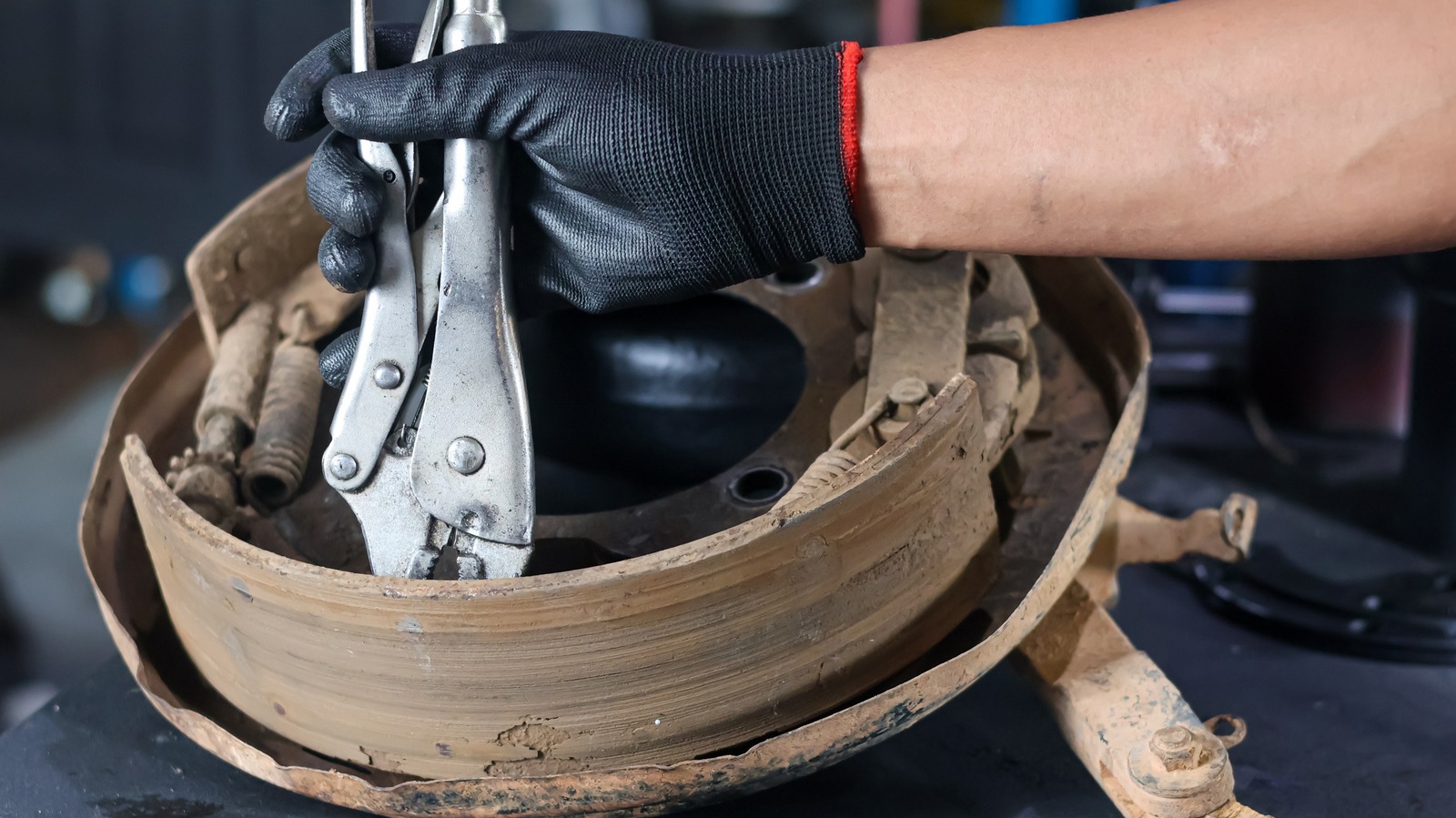
The Irwin Vise-Grip 10Ris a heavy-duty, carbon-steel locking plier designed to clamp onto fasteners, pipes, or sheet metal with immense mechanical advantage, serving as a portable vise, clamp, or wrench. It retails for $16.99 USD on Amazon. It is engineered for automotive technicians, metalworkers, and DIY enthusiasts who require a reliable, non-slip mechanical hold on stubborn or damaged hardware during high-torque operations. Historically speaking, the core utility of this tool has remained largely unchanged since its invention in the 1920s, yet its primary limitation has always been the physical constraint of manual adjustment.
🛒 Where to Buy: Irwin Vise-Grip 10R Locking
Editorial Note & Product Verification: The Cool Great Buys editorial desk independently verifies manufacturer technical specifications, cross-checks active retail availability across authorized sellers, and evaluates verified consumer reliability data before publishing product evaluations. All featured prices and promotions reflect active market rates at the time of publication.
- Irwin Vise-Grip 10R Locking: View on Amazon
Click the link above to check current pricing, availability, and customer reviews on Amazon.
For decades, operators have relied on the knurled adjustment screw at the base of the handle to calibrate the jaw opening and clamping pressure. In practice, this manual process introduces a significant bottleneck: tightening the screw by hand often fails to generate sufficient clamping force, leading to slippage under heavy load. This limitation is particularly pronounced when working with greasy hands, wearing bulky work gloves, or operating in confined spaces where physical leverage is restricted. The introduction of a machined hex socket within the adjustment bolt directly addresses this mechanical bottleneck, transforming how the tool is utilized in demanding industrial and automotive workflows. Initial product disclosures and reporting were tracked via Slashgear.
The consequences of a loose grip are notable in professional environments. Whether one is securing a damaged bolt head for extraction, holding a metal workpiece in place for welding, or stabilizing a pipe during a plumbing repair, any micro-slippage can ruin the workpiece or cause injury. Because these tools are built to endure decades of abuse—indeed, they can be older than the person using it—the mechanical design must be exceptionally robust. The integration of the hex socket represents a subtle but profound evolution in the tool’s hardware architecture, offering a solution to a problem that went unaddressed for nearly a century.
Engineering Architecture & How It Works
To understand the impact of this design modification, one must examine the classic over-center toggle mechanism that defines the locking plier. The tool operates on a compound lever system where closing the handles forces a central drive bar past its pivot point, locking the jaws in place. The clamping force exerted by the jaws is a direct function of how tightly the adjustment bolt is threaded into the mobile handle. Historically, this bolt was a simple solid steel screw with a knurled head, relying entirely on the friction between the operator’s fingers and the steel to set the tension.
The modern engineering update integrates a 3/16-inch hex socket directly into the head of the adjustment bolt. This design choice allows the operator to insert a standard hex key or a cordless impact driver equipped with a hex bit directly into the end of the tool. By turning the bolt mechanically rather than manually, the operator can adjust the jaw tension while the tool is already clamped onto the workpiece. This eliminates the traditional trial-and-error cycle of clamping, testing the tension, unclamping, adjusting the screw by hand, and clamping again.
According to technical documentation published with this release, the inclusion of the hex socket allows for a substantial increase in applied torque to the adjustment screw without risking damage to the threads. This is a critical engineering trade-off; older attempts by generic manufacturers in the early 2000s to solve this leverage issue involved adding plastic-winged thumb screws or T-bars to the adjustment bolt. Those designs failed because the plastic wings frequently sheared off under moderate torque, and the T-bars increased the tool’s physical footprint, making it unusable in tight engine bays. The recessed hex socket preserves the tool’s compact, streamlined profile while utilizing the high tensile strength of machined carbon steel to withstand the forces exerted by mechanical drivers.
Real-World Performance Reality
In practical application, the presence of the hex socket fundamentally alters the tool’s performance envelope. When attempting to extract a severely rusted or rounded bolt, manual tightening often leaves just enough play for the jaws to slip, further damaging the fastener. By clamping the Irwin Vise-Grip 10Ronto the bolt head and then using a hex key to drive the adjustment screw tighter, the jaws bite into the metal with a level of force that is physically impossible to achieve by hand. The distinction matters here: it transforms the tool from a simple locking plier into a high-torque extraction device.
Furthermore, the hex socket serves as a vital maintenance feature as the tool ages. Over years of exposure to paint, oil, water, and welding spatter, the threads of the adjustment screw inevitably accumulate debris and corrosion. A knurled screw that has become seized or difficult to turn by hand can easily be freed by inserting a hex key, allowing the operator to leverage the tool back into service. This is a significant advantage for tools that spend their lives in harsh industrial environments where regular maintenance is rarely performed.
However, this engineering choice does introduce certain practical limitations that are worth observing. While the use of an impact driver to tighten the jaws provides unparalleled clamping force, it also introduces the risk of crushing fragile workpieces or stripping the internal threads of the plier handle if over-torqued. The operator must exercise professional judgment, as the mechanical advantage provided by power tools can easily exceed the material limits of softer metals like aluminum or copper. Additionally, if you do not have a hex key or driver bit readily available, you are relegated back to the traditional knurled grip, which remains somewhat small on this model compared to older, non-socketed generations.
Competitive Landscape: Named Rivals Compared
When evaluating the locking plier market, the primary competitor to the Irwin design is the Milwaukee 48-22-3420Torque Lock Curved Jaw Locking Pliers, which retail for $19.97 USD on Amazon. Milwaukee’s approach to the leverage problem is distinct: instead of a recessed hex socket, they employ a thumb screw with a large, integrated through-hole. This design allows the operator to insert a screwdriver shaft or a metal rod through the screw head to act as a T-handle, generating extra leverage. While this system does not require a specific hex key, the protruding loop of the Milwaukee screw adds physical bulk to the end of the tool, which can catch on surrounding obstructions in tight spaces, such as behind an engine block or inside a junction box.
In contrast, the premium European segment is represented by the Grip-On 111-10Locking Pliers, manufactured in Spain and retailing for $38.50 USD on Amazon. Grip-On has chosen to maintain a traditionalist approach, focusing on superior metallurgy, an epoxy coating for spatter resistance, and a highly precise forged jaw mechanism. Notably, the Grip-On lacks any mechanical assist on its adjustment screw, relying entirely on a standard knurled bolt. While the overall build quality and durability of the Grip-On steel are arguably superior to both Irwin and Milwaukee, the lack of a hex socket or through-hole means it cannot match the raw clamping force of its rivals when mechanical leverage is required. For heavy extraction tasks, the engineering trade-off favors the Irwin or Milwaukee designs over the traditional premium build of the Grip-On.
Final Buyer Recommendation: Practical Value Decision
For professional mechanics, fabricators, and heavy-duty DIYers, the choice hinges on the specific demands of their environment. If your work frequently involves seized fasteners, welding fabrication, or high-torque extractions, purchasing a locking plier with a mechanical assist is highly recommended. The Irwin Vise-Grip 10R, with its integrated hex socket, offers an exceptional balance of utility and affordability at $16.99 USD, making it one of the most budget-friendly finds at Home Depot or Amazon. It is also worth noting that for those seeking specialized clamping solutions, there are a variety of Fireball tools you can get for under $50 that complement these pliers in a welding setup.
Conversely, for casual household users who only require locking pliers for light-duty tasks—such as holding a small pipe steady or clamping a glued joint—the traditional hand-tightened models remain perfectly adequate. However, given that the price premium for the hex-socket version is virtually non-existent, it is logical to opt for the modern design. When purchasing, it is critical to verify the presence of the hex socket on the specific model, as older stock without this feature remains in circulation. The addition of the hex socket is a masterclass in subtle, high-impact tool design, proving that even a century-old hardware staple can be meaningfully improved with a simple, well-executed engineering modification.