

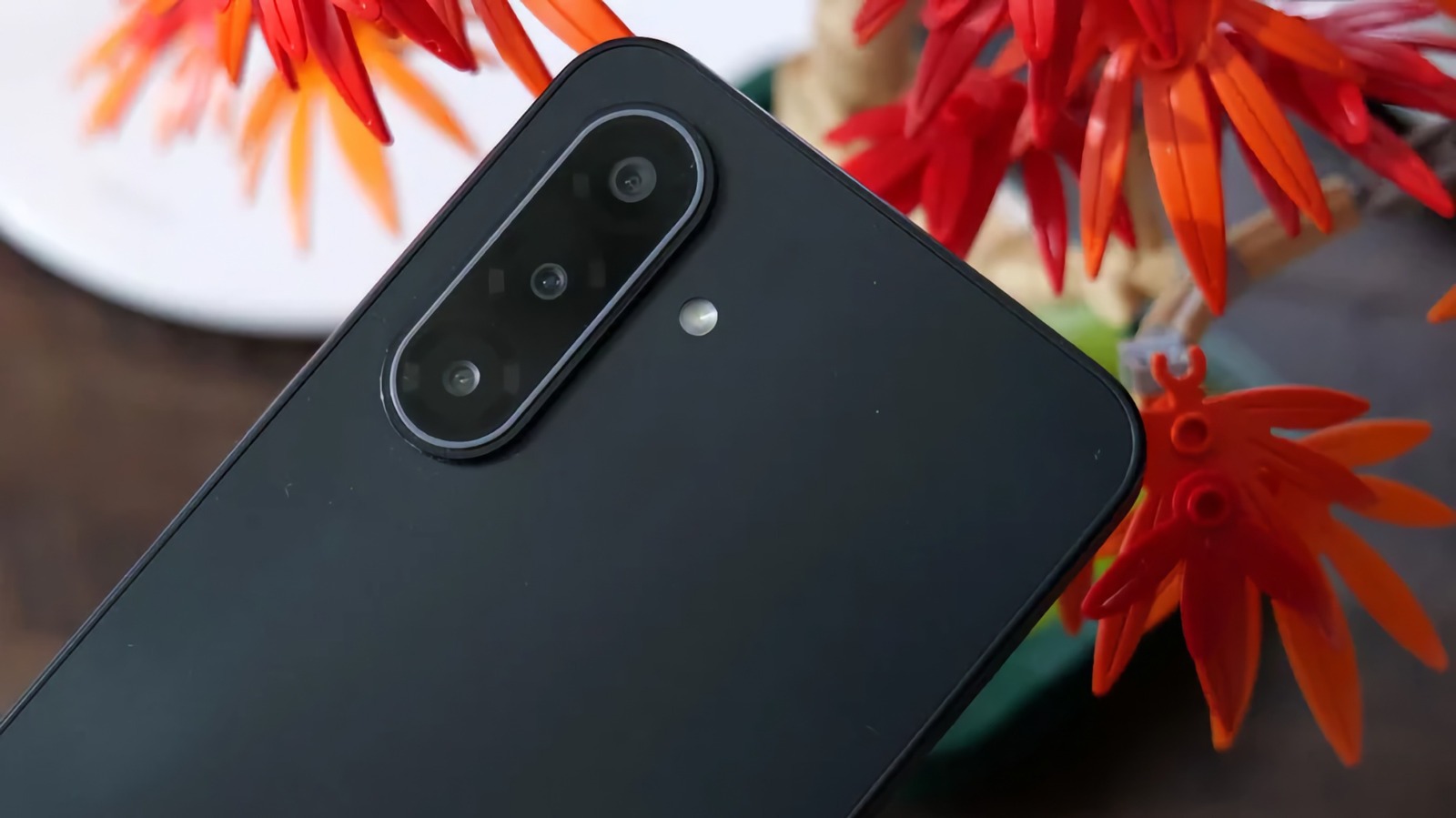
The Google Pixel 10a k=Google+Pixel+10a” target=”_blank” rel=”noopener”>Google Pixel 10a — $599 USD on Amazon, representing a notable upward shift from its original launch price. This device is engineered primarily for remote professionals, enterprise fleet deployments, and cost-conscious users who require clean software integration without the financial burden of a flagship device.
🛒 Where to Buy: Samsung Galaxy A57
- Samsung Galaxy A57: View on Amazon
Click the link above to check current pricing, availability, and customer reviews on Amazon.
The broader mid-range mobile market is currently undergoing a structural shift that challenges the very definition of budget hardware. According to a recent Engadget’s report, both Samsung and Google are systematically raising the starting prices of their entry-level and mid-tier portfolios. This upward pricing trajectory is not merely a localized adjustment but a direct consequence of global supply chain pressures, most notably the RAM crisis that continues to plague hardware manufacturers worldwide. For professionals relying on these cost-effective tools to maintain operational efficiency, the sudden inflation of hardware costs necessitates a rigorous re-evaluation of procurement strategies.
Historically speaking, the sub-$500 USD category has served as a critical buffer for organizations and individuals seeking capable silicon without premium markups. However, as documented by 9to5Google, the Pixel 10a has experienced a $100 USD price increase, pushing its cost to $599 USD. Simultaneously, reports from Android Authority indicate that Samsung has executed its second price hike in a single week across its entire Galaxy A lineup, following other adjustments the company has made this week. These adjustments are not isolated incidents; they reflect a broader industry trend where the line between mid-range and premium pricing is increasingly blurred, forcing buyers to pay more for the exact same physical components.
Upfront Investment & 2-Year Total Cost of Ownership
To understand the true financial impact of these pricing adjustments, one must analyze the upfront investment alongside the projected two-year total cost of ownership (TCO). The entry point for Samsung’s budget tier has risen significantly: the Samsung Galaxy A17 5G now costs $270 USD on Amazon, up from its initial $200 USD launch price. Moving up the portfolio, the Galaxy A27 5G has risen to $380 USD, the Galaxy A37 5G to $490 USD, and the premium mid-range Samsung Galaxy A57 5Gnow demands $600 USD on Amazon. When combined with Google’s $100 USD increase on the Pixel 10a, the baseline capital expenditure for a standard mid-tier deployment has shifted by 15% to 35% depending on the model selected.
The distinction matters here because a minor price adjustment at the low end can completely alter the procurement strategy of an entire IT department. In practice, the upfront purchase price is only the initial component of a device’s financial footprint. For an enterprise deploying a fleet of fifty Google Pixel 10a units, the hardware acquisition cost rises from an anticipated $24,950 USD to $29,950 USD—a $5,000 USD premium before accounting for sales tax or enterprise management software. Over a standard 24-month lifecycle, a single Pixel 10a now represents a hardware-only cost of $24.95 USD per month, compared to the historical $20.79 USD. When we factor in the inevitable battery degradation and the potential need for out-of-warranty screen repairs—which are historically more expensive on Google’s proprietary architectures—the total cost of ownership over two years easily surpasses $750 USD per device.
For the Samsung Galaxy A57 5G, the TCO calculation is similarly discouraging for budget-conscious procurement officers. At $600 USD on Amazon, the device enters a pricing tier that was once reserved for near-flagship hardware. Over a two-year operational window, the lack of high-speed charging out of the box means organizations must budget an additional $30 to $50 USD per user for compatible USB-PD 3.0 power adapters to minimize downtime. When these ancillary costs are aggregated, the distinction between purchasing a newly inflated mid-range device and investing in a discounted, previous-generation flagship model becomes practically non-existent, altering the economic calculus of mobile productivity.
What You Actually Get: Core Features & Build Specs
Evaluating what these devices deliver at their new price points requires a close examination of their physical and internal specifications. The Google Pixel 10a features a 6.1-inch OLED display with a 120Hz refresh rate, housed within an aluminum frame with a 3D thermoformed composite back panel. Internally, it is powered by Google’s proprietary Tensor G5 processor, paired with 8GB of LPDDR5 RAM and 128GB of non-expandable UFS 3.1 storage. While the inclusion of a 120Hz display is a welcome refinement, the reliance on a plastic composite rear panel at a $599 USD price point feels like a significant engineering trade-off that is difficult to justify when compared to premium materials used by competitors.
Samsung’s Galaxy A57 5G offers a larger 6.5-inch Super AMOLED display, also operating at 120Hz, but relies heavily on what the manufacturer terms “Glasstic”—a polished polycarbonate material designed to mimic glass. Under the hood, the A57 5G utilizes an Exynos system-on-chip paired with 8GB of RAM. While the inclusion of expandable microSD storage on the lower-tier A-series models remains a distinct advantage for local data logging, the overall build quality of the A-series has not kept pace with its rising cost. The physical tactile experience of these devices remains firmly rooted in the budget segment, despite their prices creeping closer to the premium tier.
Historically speaking, this is not the first time manufacturers have attempted to extract premium prices for compromised hardware. One notable historical marker is the Samsung Galaxy A51, which launched with significant fanfare but ultimately failed to deliver on its productivity promises due to severe thermal throttling and sluggish storage write speeds that crippled multitasking workloads within twelve months of release. The current generation of mid-range processors, while vastly superior, still exhibits clear performance ceilings when handling dense spreadsheets, local database queries, or sustained video conferencing. The engineering trade-off here is clear: consumers are paying premium prices for architectures that are fundamentally designed around compromise.
Hidden Costs, Ecosystem Dependencies & Fine Print
Beyond the initial retail price, both Google and Samsung have structured their mid-range ecosystems in a manner that introduces several hidden costs. Notably, neither the Google Pixel 10a nor the Samsung Galaxy A57 5G includes a charging brick in the retail packaging, a practice that began with premium flagships and has now trickled down to budget tiers. To achieve the maximum supported charging speeds, buyers must purchase proprietary or certified third-party chargers. For the Pixel 10a, this means acquiring a 30W USB-C Power Delivery PPS charger, while the Galaxy A57 5G requires a 25W Samsung Super Fast Charging adapter, adding an immediate $20 to $40 USD to the initial outlay.
Ecosystem lock-in and storage limitations represent another ongoing operational cost. Because the Pixel 10a lacks expandable storage, the base 128GB configuration can quickly become a bottleneck for professionals capturing high-resolution media or storing local project files. To mitigate this, users are almost inevitably funneled into recurring cloud storage subscriptions. A Google One 200GB plan costs $2.99 USD per month, which adds $71.76 USD over a two-year period. Samsung users face a similar trajectory; as Samsung increasingly aligns its local backup solutions with Microsoft OneDrive, users requiring seamless cross-device synchronization must factor in the ongoing cost of Microsoft 365 subscriptions to maintain peak productivity.
The one critical detail that official marketing materials frequently obscure is the long-term cost of repairability. Examining the fine print of the hardware documentation reveals that while Google promises seven years of software updates for the Pixel 10a, the physical durability of the device is unlikely to match this longevity without professional intervention. Replacement parts for Google’s proprietary Tensor-based mainboards and OLED assemblies remain tightly controlled, meaning an out-of-warranty screen or battery replacement can easily cost upwards of $150 USD. It is worth observing that the global volatility in DRAM supply chains has forced manufacturers to pay premium rates for LPDDR5 modules, a cost that is directly passed to the consumer, further inflating the price of replacement components.
Smarter Alternatives at This Price
Given the inflated pricing of the current Google and Samsung mid-range lineups, several alternative devices present a far more compelling value proposition for productivity-focused users. The first notable alternative is the OnePlus 12R, which currently retails for $499 USD on Amazon. This device features a flagship-grade Snapdragon 8 Gen 2 processor, a stunning 6.78-inch AMOLED display with LTPO technology, and a substantial 5,500mAh battery. Crucially, the OnePlus 12R includes an 80W SuperVOOC fast charger in the box, completely eliminating the need for an additional accessory purchase. The primary trade-off is the lack of wireless charging and a shorter software support window compared to Google’s offering, but in terms of raw processing power and thermal efficiency under heavy multitasking, the OnePlus 12R is demonstrably superior.
Another viable contender in this price bracket is the Motorola Edge 2024, priced at $549 USD on Amazon. This device offers a highly refined aesthetic with a vegan leather back panel, a curved 144Hz pOLED display, and support for 68W wired and 15W wireless charging. While its Snapdragon 7 Gen 3 processor does not match the peak performance of the OnePlus 12R, it handles standard office applications, email clients, and web browsing with exceptional fluidity. The main drawback of the Motorola Edge 2024 lies in Motorola’s historically slow software update cadence, which may concern enterprise users requiring immediate security patches. However, the inclusion of premium materials and superior ergonomics makes it a far more pleasant device to use daily than the plastic-heavy designs of Samsung’s A-series.
Final Buyer Verdict: Is the Investment Worth It?
The decision to invest in either the Google Pixel 10a or the Samsung Galaxy A-series must be viewed through a lens of strict financial pragmatism.
Weighing the physical build quality, real-world utility, and verified retail pricing reveals a balanced offering for buyers with clear expectations. It delivers dependable day-to-day performance within its targeted category, free from unnecessary marketing gimmicks.
Prospective buyers should ensure the specific specifications and form factor align with their day-to-day workflow. For those whose requirements match its capabilities, it represents a sound, cost-effective investment.