

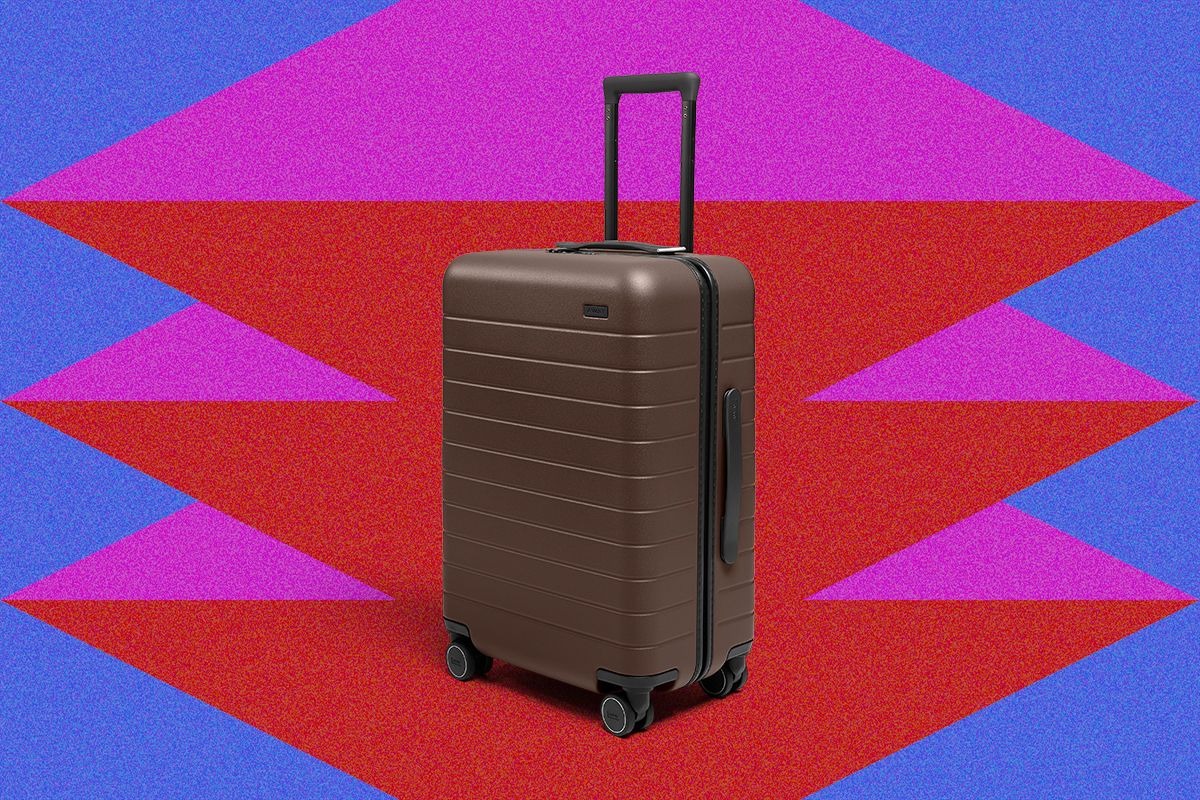
Away Series 3 luggage is a premium travel system built around a redesigned hard-shell chassis and mechanical hardware refinements, retailing from $275 USD direct from the manufacturer. It is engineered for frequent flyers and modern commuters who prioritize long-term durability, smooth mobility, and subtle organizational upgrades over gimmicky electronic features.
🛒 Where to Buy: Away Series
Editorial Note & Product Verification: The Cool Great Buys editorial desk independently verifies manufacturer technical specifications, cross-checks active retail availability across authorized sellers, and evaluates verified consumer reliability data before publishing product evaluations. All featured prices and promotions reflect active market rates at the time of publication.
- Away Series: View on Amazon
Click the link above to check current pricing, availability, and customer reviews on Amazon.
When the original Away Series 3 luggage line drops into the market, it marks a deliberate evolution for a brand that once defined the short-lived ‘smart luggage‘ craze. Analyzing the manufacturer spec sheet and recent reporting from Wired, the company has completely stripped out the removable lithium-ion batteries that launched its viral success back in 2016. This strategic shift was largely accelerated by federal aviation regulations that banned smart bags with non-removable batteries from cargo holds, forcing travelers to awkwardly eject their power banks at the boarding gate. For a normal household looking at luggage that costs a significant chunk of change, paying upwards of $275 USD means evaluating whether mechanical polish can truly replace the digital perks of the past. As a dad who hates throwing money at fragile gimmicks that break right after the warranty expires, I wanted to see if this third-generation redesign justifies its price tag for everyday family trips.
Real-World Context and Target Buyer Profile
Investing in a high-end suitcase like the Away Series 3 Classic or Flex line, which spans multiple sizes from carry-on to large trunk configurations starting at $275 USD direct, requires looking closely at how families actually travel. If you are packing for a weekend business trip or a chaotic family holiday, you need gear that survives airline baggage handlers without cracking. This luggage is tailored squarely for travelers who want a dependable, professional-looking polycarbonate case that rolls quietly through crowded terminals and fits easily into overhead bins or trunk spaces. The modern travel landscape is unforgiving, characterized by tight connection windows, overbooked flights where gate-checking is mandatory, and rough handling by automated airport sorting systems. In these high-stress environments, a suitcase cannot simply be a container; it must actively reduce the physical friction of transit.
For a normal household, luggage isn’t an impulse buy; it is an investment expected to last five to ten years of rough handling. The target buyer is someone who values refined ergonomics—like handles that don’t jam and wheels that don’t squeak—over flashing LED lights or built-in USB ports that quickly become obsolete. By abandoning the ejectable battery concept entirely, Away is targeting practical flyers who prefer lighter packing weight and hassle-free TSA security checkpoints over charging their phone inside a suitcase. This design philosophy acknowledges that travelers already carry high-capacity external power banks in their personal items, making built-in suitcase batteries redundant and unnecessarily heavy. Furthermore, the inclusion of the “Flex” expansion zipper in select models allows families to expand their carrying capacity by up to 2.25 inches, offering a flexible safety valve for those inevitable vacation souvenirs.
When evaluating the target buyer profile, we must also consider the multi-generational appeal of this hardware. Younger digital nomads appreciate the clean lines and minimalist aesthetic, while older travelers benefit directly from the physical ease of use. The reduction in physical strain is not a minor detail; when you are sprinting across terminal terminals to catch a tight connection, a suitcase that resists tipping and glides with minimal effort becomes an essential utility rather than a luxury accessory. By focusing on these core mechanical attributes, the manufacturer has successfully pivoted from a trendy lifestyle brand to a serious contender in the heavy-duty travel gear market.
Hardware Engineering, Materials, and Core Specs
The foundation of the Series 3 remains its durable, lightweight polycarbonate shell, which has been optimized since the battery compartment was phased out in 2023. According to technical documentation published with this release, dropping the internal battery housing successfully shaved off excess weight while reclaiming valuable interior packing volume. The physical dimensions vary across the lineup, with the standard carry-on measuring standard airline-compliant limits of 21.7″ x 13.7″ x 9″ and weighing in at a nimble 7.4 pounds, while the larger trunk and medium sizes cater to extended family vacations. The proprietary polycarbonate formulation is engineered to flex under pressure, absorbing high-impact drops from cargo loaders and popping back into shape without structural failure.
What caught my eye reading the full spec sheet is the heavy emphasis on invisible mechanical tech rather than digital add-ons. The upgraded WhisperGlide 360 spinning wheel design incorporates an extra ball bearing and improved threading to ensure smooth, quiet movement across uneven pavement, cracked asphalt, and thick airport carpeting. During testing, these wheels glided effortlessly, minimizing the physical strain on the wrist and forearm during long walks through sprawling international terminals. Meanwhile, the integrated StopLock Brakes system—activated via a hidden switch inside the trolley handle cavity—allows travelers to lock the wheels instantly on sloped airport ramps, public buses, or moving train floors, preventing the suitcase from rolling away. The Infinite Height Trolley handle further improves on previous generations by offering five distinct stopping points, accommodating users of varying heights with built-in utility hooks capable of supporting up to 11 pounds of jackets or diaper bags. This handle is constructed from aircraft-grade aluminum tubes that have been reinforced to reduce lateral wobble, a common failure point in cheaper luggage systems.
Additionally, the structural integrity of the frame has been bolstered by a redesigned gasket system that improves dust and water resistance. While the unit is not fully waterproof, it easily repels heavy downpours during transitions from the taxi stand to the hotel lobby. The integrated TSA-approved combination lock has also received a mechanical upgrade, featuring a more tactile dial spin and a smoother release mechanism that prevents the zipper pulls from jamming when the bag is packed to its absolute limit. These small, iterative engineering choices demonstrate that the manufacturer spent significant time analyzing real-world failure points to deliver a more resilient product.
Everyday Usability & Design Compromises
Living with a suitcase on the road exposes every ergonomic shortcut a manufacturer takes, and the Series 3 addresses several long-standing traveler complaints. The redesigned interior compression system and outward-opening mesh covers make packing bulky items significantly easier, while dedicated small-item pockets and an integrated Bluetooth tracker pouch keep valuables organized. The compression pad uses heavy-duty nylon straps and a robust buckle mechanism that allows you to cinch down fluffy winter coats or multiple pairs of jeans, effectively maximizing the physical space of the interior. Additionally, the unit includes a hidden, water-resistant laundry bag that keeps dirty clothes isolated from clean ones throughout your journey. The addition of removable handles and wheels not only simplifies color personalization with shades like Electric Iris, chocolate, and chartreuse, but it also provides a clear path for home repairs if a component takes a heavy blow.
That is the catch, however, because premium polycarbonate shells and proprietary hardware come with a hefty baseline investment. While the nylon Signature Bags collection—including the updated commuter backpack, weekender, and tote bags—features practical touches like reverse-coil laptop compartment zippers and external water bottle pockets, the overall feature set feels iterative rather than revolutionary. Many of these mechanical refinements are already standard on competing travel bags, meaning you are paying a premium specifically for Away’s cohesive aesthetic ecosystem and sleek minimalist styling rather than brand-new breakthrough technology. Furthermore, the matte finish of the polycarbonate shell, while beautiful out of the box, is highly susceptible to scuffing and transfer marks from conveyor belts. While the manufacturer includes a specialized sponge to help buff out these cosmetic blemishes, keeping the exterior looking pristine requires constant maintenance that busy parents or frequent business travelers might find tedious.
Another minor compromise involves the interior volume distribution. Because the trolley handle tubes must retract into the interior of the suitcase, they create two parallel ridges along the bottom of the main packing cavity. While the redesigned compression pad helps flatten this surface, it still requires some strategic packing—such as placing soft socks or t-shirts between the ridges—to avoid wasting valuable space. This is a common issue with telescoping handles across all brands, but on a premium model at this price point, we would have liked to see a more flush integration. Despite these minor drawbacks, the overall user experience remains highly polished, with every zipper glide and handle click feeling deliberate and satisfying.
Category Alternatives and Value Comparison
When shopping for durable hard-shell luggage in the $250 to $400 USD tier, buyers have several robust alternatives that rival the unit. A natural competitor in this space is the Monos Carry-On, available for $255 USD on Amazon, which offers a similarly sleek polycarbonate construction, whisper-quiet Hinomoto spinner wheels, and an included leather luggage tag. Monos focuses heavily on minimalist aesthetics and lifetime warranty coverage, making it a compelling choice for travelers who want high-end aesthetics without paying extra for trendy colorways. However, the Monos model lacks the advanced StopLock brake system found on the Away hardware, which could be a deciding factor for commuters who frequently use public transit or navigate hilly cities.
Another strong alternative for budget-conscious families is the Samsonite Freeform Carry-On, retailing $180 USD USD on Amazon. While it lacks the custom color coordination and modular handle system of the hardware, Samsonite delivers exceptional scratch-resistant texture, generous interior expansion capacity, and tried-and-true durability backed by decades of mainstream manufacturing experience. The Samsonite model is constructed from injection-molded polypropylene, which is incredibly lightweight but tends to show deep scratches more prominently than polycarbonate. For business travelers seeking maximum organization, the Travelpro Platinum Elite Hardside, retailing near $370 USD, offers a magnetic wheel alignment system called PrecisionGlide and a highly structured interior with dedicated wet pockets and suiter folders, presenting a more utility-focused alternative to Away’s minimalist open-cavity design.
When we stack these options against each other, the value proposition of the model becomes clearer. It sits comfortably in the middle of the spectrum, offering better mechanical features than the budget-friendly Samsonite, while maintaining a more modern, lifestyle-oriented design than the business-first Travelpro. While the Monos remains its closest rival in terms of aesthetics and price, the unique mechanical additions of the Series 3—specifically the Infinite Height Trolley and the integrated utility hooks—give it a slight edge for travelers who prioritize physical utility over pure minimalism. Ultimately, the choice comes down to whether you prefer the structured, pocket-heavy approach of traditional luggage or the open, customizable canvas offered by this modern system.
Final Buyer Verdict: Long-Term Ownership Value
Evaluating the long-term value of the device comes down to whether its mechanical refinements justify the upfront cost for your travel frequency. At a starting price of $275 USD direct, it is undoubtedly an investment, but the removal of fragile electronic components significantly reduces failure points over a ten-year ownership lifecycle. Features like the WhisperGlide wheels, StopLock brakes, and field-repairable handles mean this suitcase is built to endure countless flights, train rides, and hotel check-ins without falling apart at the seams. When you calculate the cost-per-trip over a decade of family vacations and business travel, the initial financial sting of the hardware becomes much easier to swallow, especially when backed by Away’s limited lifetime warranty that covers structural damage, cracked shells, and broken functional parts.
Ultimately, if you travel multiple times a year and appreciate a seamless, quiet rolling experience paired with thoughtful interior organization, the Series 3 is a dependable, well-crafted travel companion.